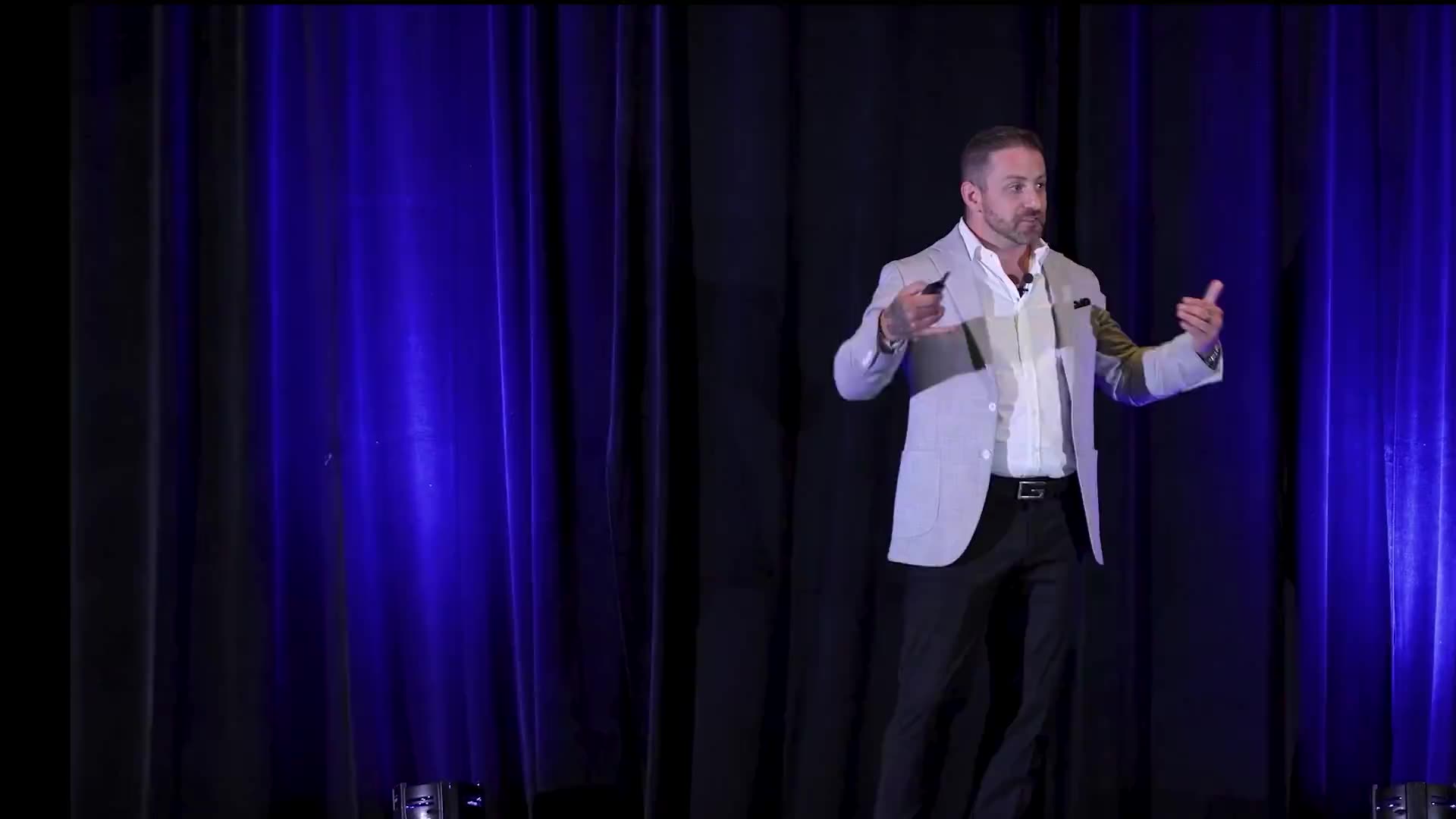
Keynote
Raising capital without a track record
How a first-time operator becomes fundable — what investors are actually underwriting when there's no history to point at.
Author · Speaker · SIMM Capital · SCG Global
I've been raising capital since 2006. Not from a lecture hall — from the operating side, deal by deal, through two downturns. Everything I teach, I built first.
We partner with a small number of businesses, help them scale, and build toward a real exit — a sale to private equity, an acquisition by us, or an investment from us. We get paid out of the growth we create, so we only win if you do.
Conferences, masterminds, and private events. I speak about what actually moves capital, with numbers on the screen instead of slogans.
The HoldCo Mastermind
Most owners are building a business nobody can buy. The work that makes a company sellable is different from the work that makes it bigger, and almost nobody does it until the year they want out.
The HoldCo Mastermind is a partnership. We work with a small number of companies to scale them properly and build toward an exit — whether that's a sale to private equity, an acquisition by us, or capital from us to keep going. We're paid out of the growth, so our incentive and yours aren't just aligned in principle — they're the same number.
How we get paid
We take a percentage of
the growth we help create.
That's it.
No growth, no fee. It means we can't make money by being busy, running a nice workshop, or filling a calendar — the only thing that pays us is the business being measurably bigger than when we started.
Three ways this ends
We scale the business and get it institutionally sellable — clean books, a team that runs without you, and a story a buyer can underwrite.
If it fits what we're building, we buy. You've already spent a year working with the people on the other side of the table, which is a better way to sell a company.
Not everyone wants out. If you'd rather keep going, we put capital in and stay in it with you.
We're an advisor and a potential buyer in the same relationship. That's a real conflict and we'd rather name it than have you discover it. Our fee is tied to growth, not to which exit you choose — every path above stays on the table, and which one you take is your call, not ours.
The history
I didn't come up through Wall Street. I came up through operating businesses that had to make payroll, and I learned to raise money because I needed it.
My first real education came from a mentor on a sales floor, not a classroom. He taught me that every business runs on four variables — cash, people, inventory, and customers. Twenty years later I've never found a fifth.
Started in real estate and raised outside money for the first time. I learned fast that a good deal and a fundable deal are not the same thing.
I ran real operating businesses across manufacturing and retail. I exited some of them well. One went through bankruptcy. That one taught me more about capital structure than every deal that worked, and it's the reason I'm careful about the things most people gloss over.
Founded the firm and moved from raising deal by deal to running real structure — institutional discipline applied to private real estate and private equity. Over $400 million under management today, and more than $750 million in deal volume since that first raise in 2006.
Published Become Scaleable, built the HoldCo Mastermind, and took it to the stage — now partnering with owners on the scale-up and the exit, from both sides of the table.
Speaking
Twenty years of live raises, a book, and a firm behind the material. Confirm these three topics or swap them for the talks you actually deliver — this grid takes any three.
How a first-time operator becomes fundable — what investors are actually underwriting when there's no history to point at.
The transition from running a business to running other people's money, and the habits that have to change on the way.
A working session where the room leaves with a written raise plan instead of a page of notes.

A growth playbook · out now
Your business needs you.
That's the problem.
If everything important still routes through you, you don't own a business — you own a job with unusually bad hours. This is the operating discipline I've used across manufacturing, retail, and real estate to break that dependency: the unglamorous parts nobody posts about, which are the parts that actually move a company.
The firms
Two firms, two disciplines. Real estate runs through SIMM Capital. Operating businesses run through SCG Global. Both are the reason I'm qualified to teach any of this.
Real estate & private equity
My private real estate and private equity firm, headquartered in Pittsburgh. Multifamily, land development, and structured positions across the capital stack.
Business private equity
Our business private equity firm — the operating-company side of the platform. This is where the discipline in Become Scaleable comes from, and where the book is published.
Investment opportunities are offered only through the relevant firm, by means of that offering's own documents, and only to verified accredited investors. Nothing on this website is an offer to sell a security.
From operators I've worked with
Swap in real, attributable quotes before launch — full name, company, and permission on file.
[Placeholder — quote from a HoldCo Mastermind partner company.]
[Placeholder — quote from an event organizer who booked you to speak.]
[Placeholder — quote from a HoldCo Mastermind partner company.]
If you own a business you'd eventually like to sell — or grow with real capital behind it — start with the HoldCo Mastermind. If you run an event and want the room to leave with a plan, let's talk dates.